

#49
On the love-heart

As Valentine’s Day departs, dear darling - head still buried in historic love letters - I reflect on the origins of the love-heart. The classical love-heart which, far dissimilar from its real-life, pulsating counterpart, seeks to signify our understanding of romantic love, and adoration; a rounded swell and pounding feeling felt in the depths of one’s chest.
Cherry red, passionate.
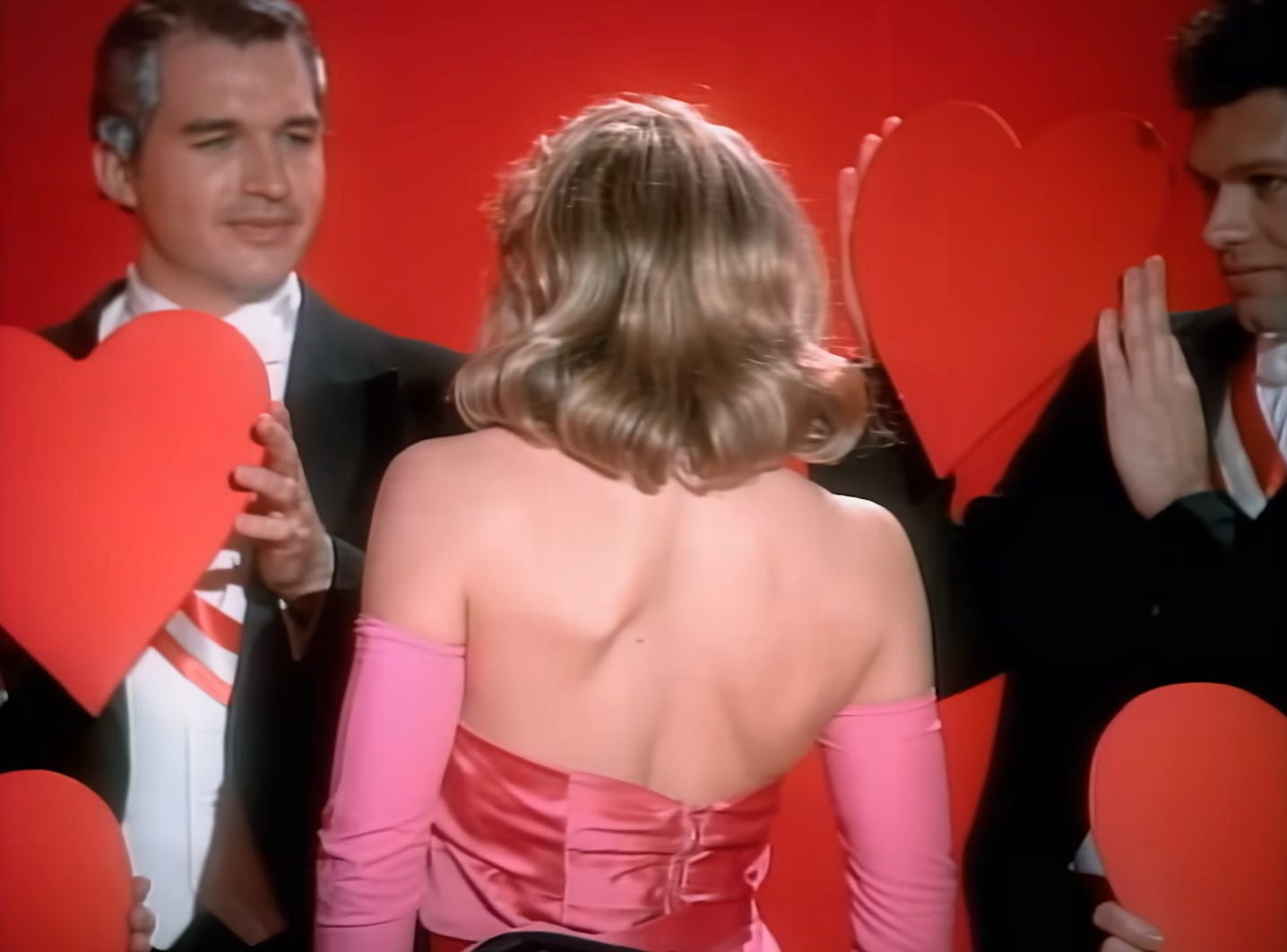
Madonna in the music video for Material Girl, from the studio album Like a Virgin, released November 1984.
Struck by an arrow, held by soft hands, or carried to the clouds by tender cherubs, the love-heart has been a well-documented motif in visual arts for centuries. From its gilded depictions in illuminated manuscripts, to the love-struck eyes of Tom and Jerry, I hold the love-heart dear as I wish away the many months until my first tattoo.
In writing this letter to you, angel, I reluctantly recall a past self; the ghost of a girl yearning to love and be loved, in arms which could not hold her. To the leech, the demon, Narcissus, I say:
“I want my heart on my sleeve.”
“You’re not getting a tattoo,” he tells me.
It’s only now, confiding in Brian de Palma’s Carrie (1976) - her blood-drenched frame muddying the rug of the therapist’s office - that I realise, reader, within that ‘want’ I was asking for permission. I recount a story as Carrie slowly lowers herself onto the edge of an armchair, neatening the marred pink silk of her prom dress, with sticky crimson fingers. Boring her wide eyes into mine, she smiles softly and gestures for me to begin.
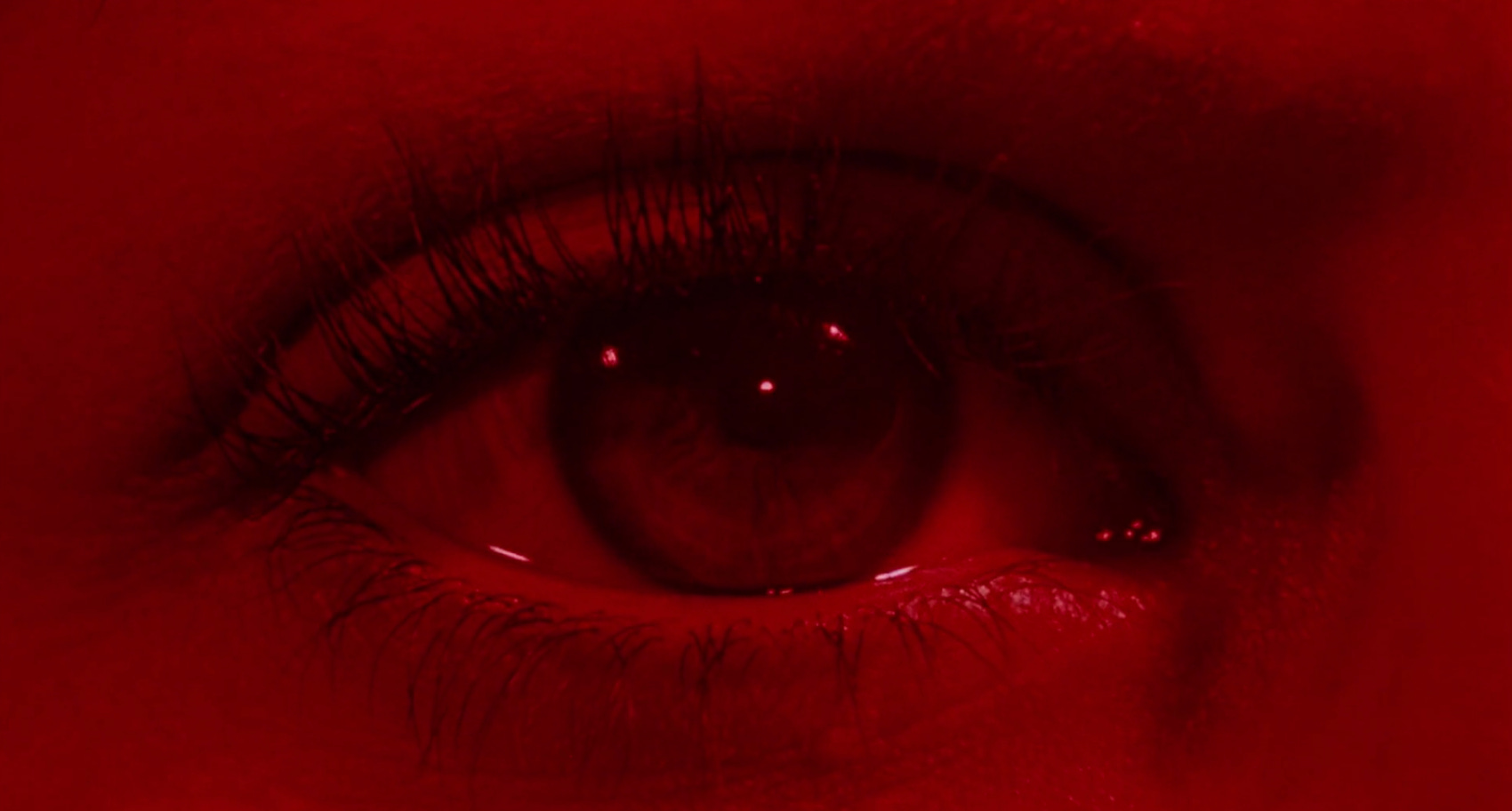
Vertigo (1958) dir. Alfred Hitchcock.
Darkness falls upon the scene as we leave central London. The cool, white fluorescent light of nearby mini-marts, bars and off-licenses, swims along the mirrored car bonnet, as I look to the River Thames from my passenger window. Beyond the pattering rainfall, a wash of red stop lights are strewn along the far-reaching road ahead, and flood the car’s interior with a vivid, ambient cast.
“You’re not getting a tattoo,” he tells me, cloaked in red. Hands firmly curled around the wheel, his eyes glaze over the traffic ahead. “What do you mean, I’m not getting a tattoo?” I blurt out as nervous laughter, failing to contain my disbelief. “I just want my heart on my sleeve,” I realise I plead.
“You’re not getting a tattoo,” he repeats, definitively.
I feel the puppeteer strings above my limbs pull taut, as I realise this isn’t love. Perhaps having my heart on my sleeve is too painful. Carrie softly tilts her head to the side, corn syrup trickling down her chest, as I return to the present.
As I research the love-heart now, I wonder in earnest its romantic origin. The heart, beyond an organ ready to break, holds a ‘conspicuous religious dimension’, as described by British art historian Martin Kemp. In Christ to Coke: How Image Becomes Icon Kemp writes: ‘The heart refers to something complicated in its original bodily form but has come to assume a special schematic shape - the heart shape - that carries a wide range of meanings.’
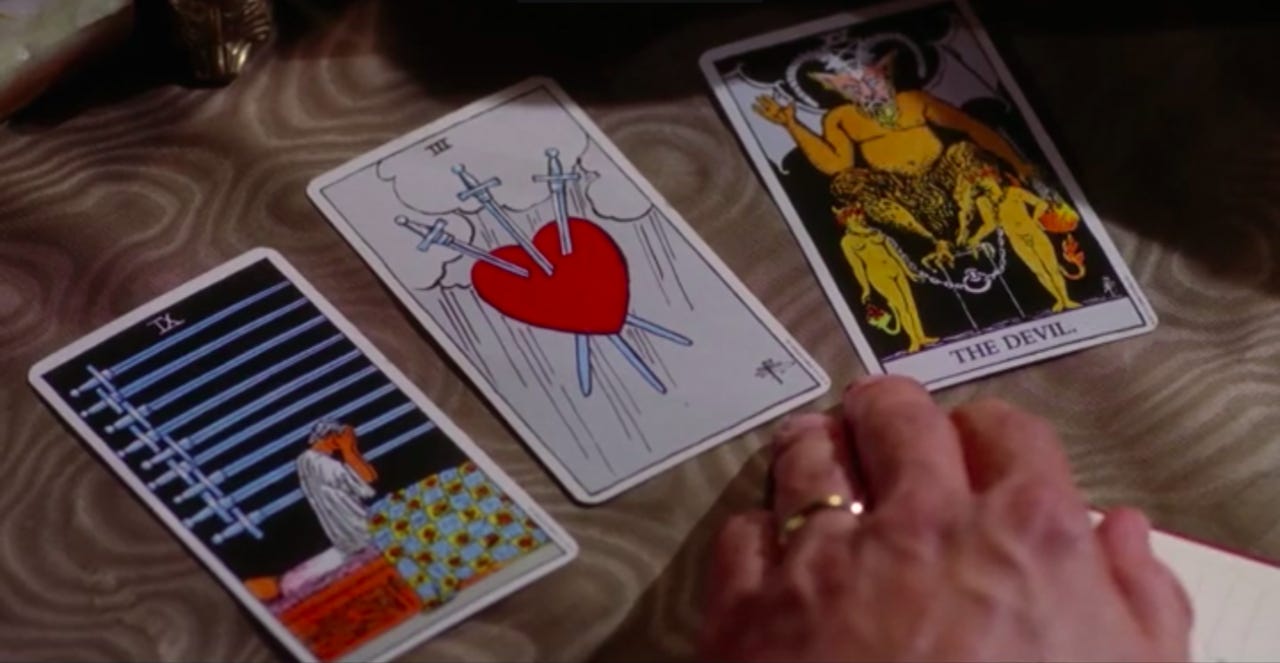
The Love Witch (2016) dir. Anna Biller.
The love-heart is recognisable in works of antiquity and beyond, with its image tracing back to the neolithic period. One of its earliest known origins in sculpture, I’ve found, lies in the Sasanian dynasty, now modern day Iran, dating back to 6th century CE. A repeat pattern in ‘stucco’ or ceramic relief tiles, the love-heart marries birds, curled foliage and decorative beading. While, visually, this image mirrors the modern-day love-heart, in truth it depicts the similarly heart-shaped, sacred fig leaf.
An image consistent in Dharmic religious art - throughout Buddhism, Hinduism, Jainism and Sikhism - the fig leaf is symbolic of enlightenment, due to the fig tree’s boundless growth, and its mystic ability to survive the harshest of climates.
Another offering of the love-heart lies in Silphium, an ancient plant used in Graeco-Roman love potions. Silphium once grew as a tall-stemmed flowering plant, as a likely relative of fennel, and was procured along the North African coast in the city of Cyrene, now Shahhat, Libya. Sought for its potent medicinal properties, Silphium was used to treat a litany of romantic ailments, including as a contraceptive, and as an aphrodisiac. Its heart-shaped seeds, evidenced in excavated silver, date back to 500-480 BCE.
While Silphium is sadly extinct, the love-heart survived. The earliest known, though often contested, literary depiction of the love-heart is within Le roman de la poir, or The Romance of the Pear (1255), an Old French romantic manuscript by poet Thibault de Blaison. Within it, a figure rests on bended knee with arms outstretched to their lover, in shrouds of long-weathered, shell gold; held in both palms as a heavy, fleshy gift: a heart, pink in colour and conical in shape.
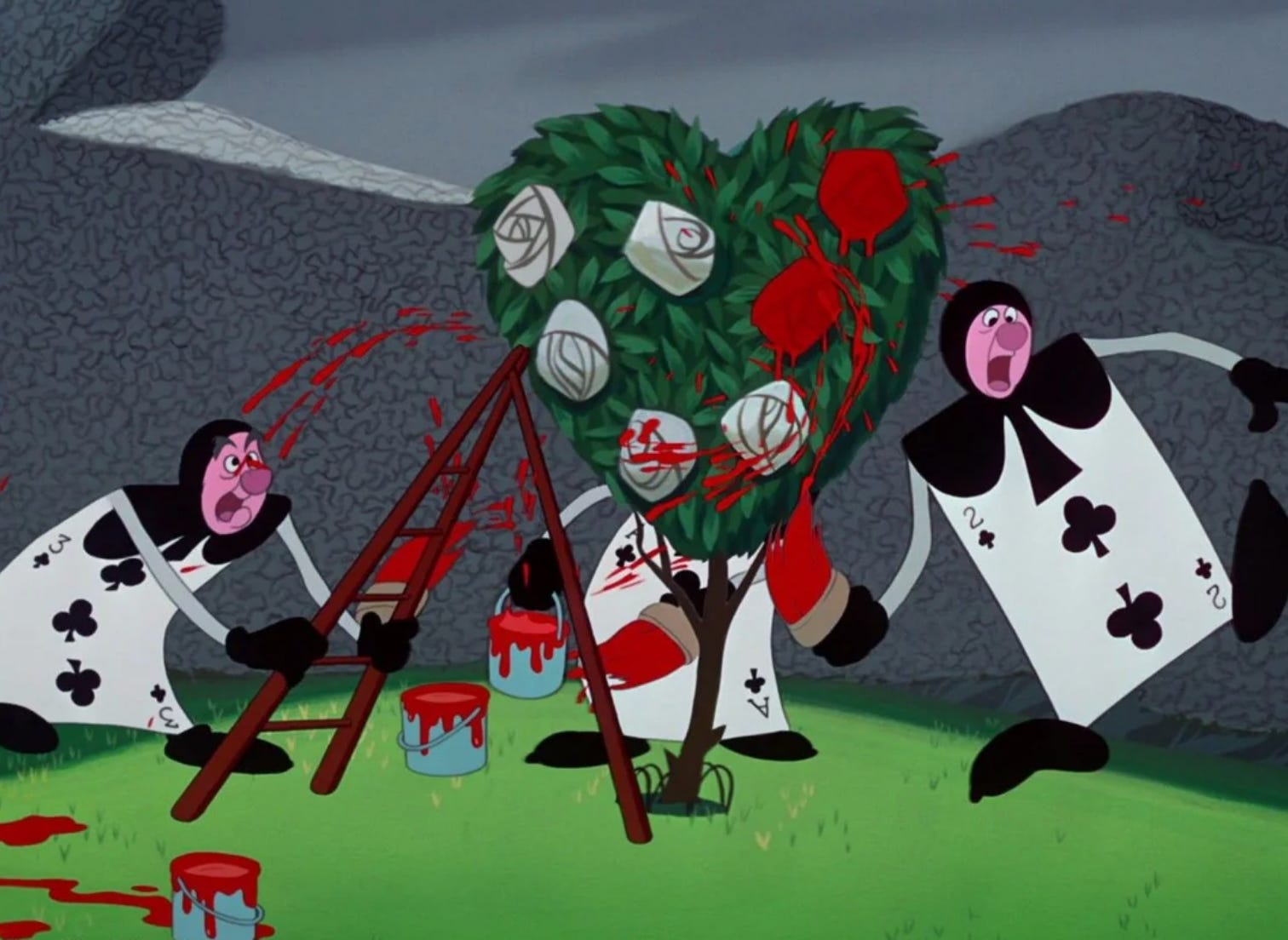
Alice in Wonderland (1951) dir. Cylde Geronimi, Wilfred Jackson and Hamilton Luske.
This shape, it seems, reflected a historic understanding of human medicine. Informed by ancient Roman physician and philosopher Galen, in his work On the Usefulness of the Parts of the Body, Galen details the function, anatomy and appearance of the human heart. Within the work, it is alleged that Galen likens the heart to a ‘pinecone’.
While this elongated image of the love-heart persists in paintings and illuminations of the early Middle Ages, the most conclusive depiction we have of the love-heart - as a romantic symbol - is hidden within The Heart Offering, an illustration from the Flemish manuscript Romance of Alexander (1338-1344) by illuminator and painter Jehan de Grise.
Cloaked in Medieval garb, a fair maiden offers her heart - plush, puckered and fleshy - as an offering to her suitor. The heart appears upright in her palm, with two plump, rounded peaks meeting symmetrically. It is within this work, and this work alone, that we definitively see the love-heart as we know today.
I look to my laptop screen, scanning an email exchange with a tattooist. ‘I want my heart on my sleeve,’ I tell him. Hurriedly, I run to the group chat and flood the feed with references; From Victorian scraps to antique pendants, Medieval illuminations and mid-century illustrations.
‘Why do you care so much? It’s just a tattoo,” a friend laments.
Moments later, my inbox swiftly pings. I note down the date in my diary, and allow myself to smile. ‘Really looking forward to it, Leah,’ he writes. I reply with near-immediacy. ‘Thank you, me too.’