

#47
On Winter

Lord, have mercy
Mercy on me
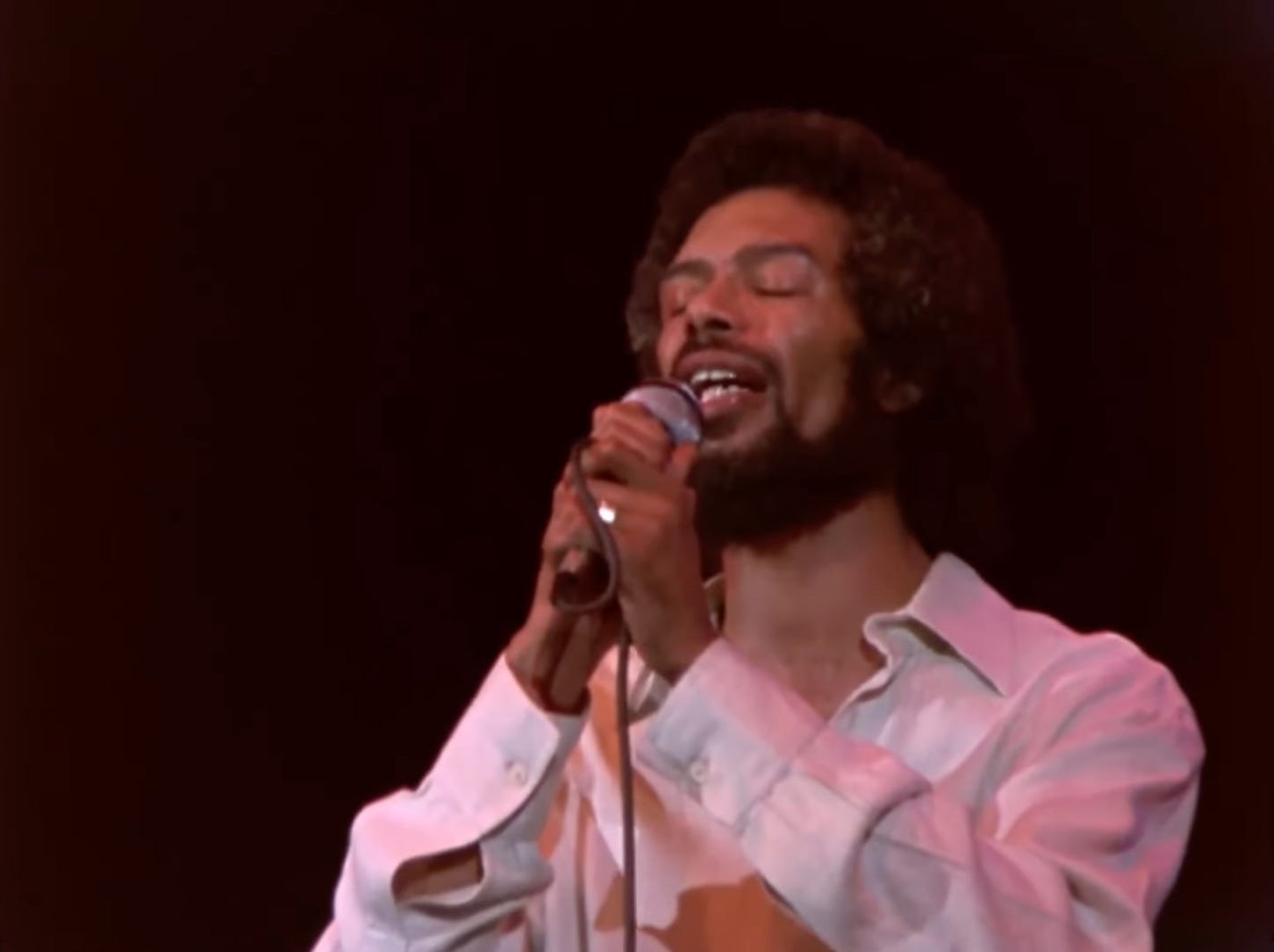
Gil Scott-Heron performing Winter in America at the Wax Museum Nightclub, Washington D.C., from the film Black Wax (1982) dir. Robert Mugge.
As of early January, each and every morning I prize myself from sleep and reach for the radio. A small, Roberts radio wrapped in red leather with soft, rounded corners and a gilt speaker. Its buttons and dials, which once held a bright sheen, have now softened to a dull patina through mutual use and neglect. The extending aerial fixed to its back is dented; a short, sharp drop to the floor when I was moving from University halls, and stuffing all belongings into bin bags. As a gift from my Father, the dent had devastated me so deeply to the degree where I refused to touch the radio, let alone listen to it.
I experience despair, amongst family and friends, those close to me and those drifting shy of my orbit; a dread, deep down, for the blustering current of international news. While my practice remains a tangled unravelling of personal grief, of bearing witness to death and reconciling with it, I cannot divorce my private burden from public horror.
Rubbing sleep-seeds from eyes which bore to frost beyond the window pane, I turn to Radio 4; a station which, much like the Roberts radio, reminds me of my Father. A presence at the kitchen sink while peeling potatoes, a fixture of almost all Sunday mornings. Amongst a well-populated programme of short-form documentaries, spoken word poetry and serial drama, has been unfolding coverage of the civilian protests against the Immigration and Customs Enforcement agency (ICE), a faction of the US Department of Homeland Security, in Minneapolis, Minnesota. As of the publishing of this work, two US citizens have been publicly executed by ICE in Minneapolis alone, namely Renée Good and Alex Pretti, both 37.
Good is best described by her own Instagram profile, once a portrait of lived experience, now an unsettling memorial: ‘Poet and writer and wife and mom and shitty guitar strummer from Colorado; experiencing Minneapolis, MN.’ Intensive care nurse Alex Pretti, shown most often smiling in his scrubs against the backdrop of the American flag, attended a public protest in the wake of Good’s death.
On the night of New Year’s Eve, 43-year-old father-of-two Keith Porter Jr. was killed by Brian Palacios, an off-duty ICE officer, outside his home in the mountainous San Fernando Valley, Los Angeles, CA. The information available around Porter, a Black American man, is distinctly sparser than that of Good and Pretti; in the life he once lived, and how that life was violently taken.
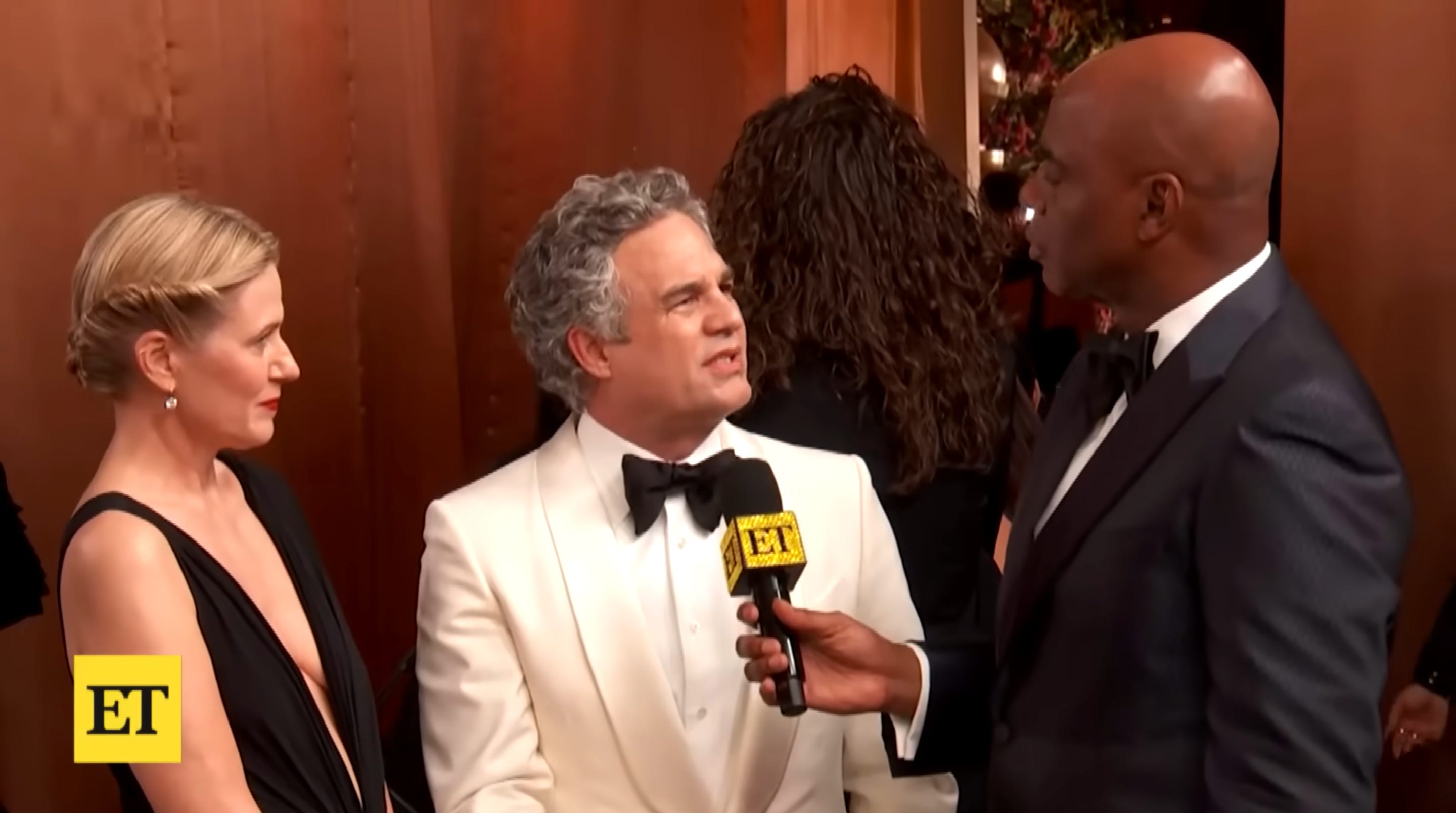
American actor Mark Ruffalo interviewed by Kevin Frazier for ‘Entertainment Tonight’ (ET), alongside wife Sunrise Coigney, at the 83rd annual Golden Globes ceremony on 12 January, 2026.
Preparing for work, I look to my phone to check the time. In that same motion, I habitually doomscroll Reddit. Within my palm, footage of US citizens being shot, gassed and pepper sprayed, is punctuated by live coverage of celebrity attendees at the 83rd annual Golden Globes. There is, to say the least, an unnerving cognitive dissonance within the evidenced descent of American democracy, against the lavish glamour of the Beverly Hilton hotel, lined by towering palm trees.
American actor Mark Ruffalo, slowly walking the red carpet, is broadcast wearing a white button badge against the lapel of his satin tuxedo jacket. It reads ‘BE GOOD’, honouring the loss of Renée Good days prior. Speaking into the bedazzled ‘Entertainment Tonight’ microphone which, for much of the interview obscures his badge, Ruffalo remarks “I don’t know if I can pretend like this crazy stuff isn’t happening.”
While writing to you, reader, I hold a golden crucifix at my neck, hanging from a short, knotted chain, between my thumb and forefinger. I run my index softly along the grooves of its Celtic engraving. An amulet and protective ware, the dime-sized pendant is something I’ve worn every day since my Dad died. The cross, it’s clear, has long been bastardised by white Christian Nationalists - no longer a symbol of hope or sacrifice, it falls to its side as a sword. Weaponised by the likes of White House press secretary Karoline Leavitt, the symbol I hold so dear to navigating my loss is, for many, a tool of hatred to hide behind, to wield a predatory, white supremacist agenda.
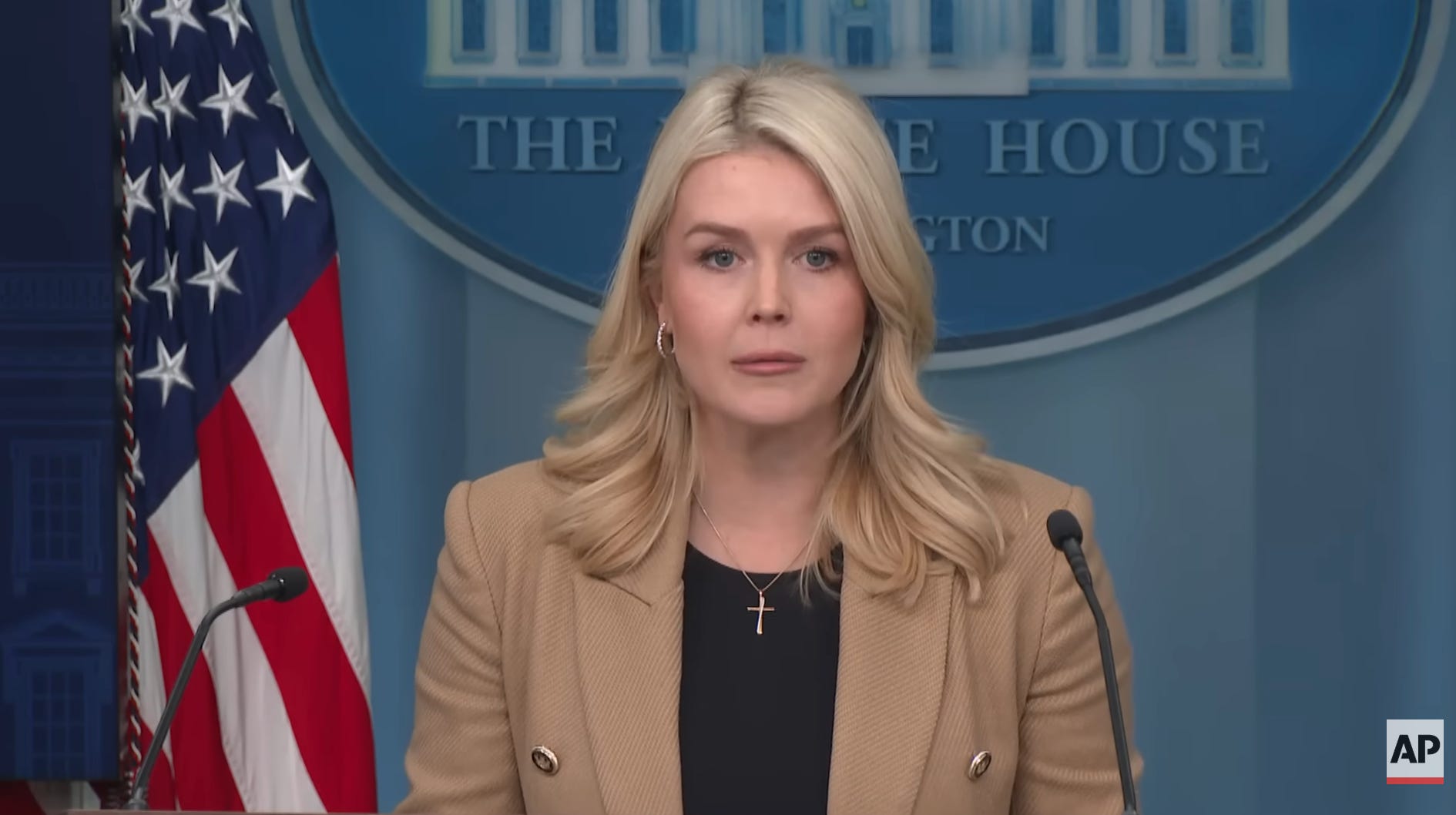
White House press secretary Karoline Leavitt at a press briefing on 15 January, 2026. Courtesy of Associated Press.
On the route home from work, I loop We’re New Here (2011), an album by British producer Jamie xx, which reworks revolutionary Black American musician and jazz poet Gill Scott-Heron’s final 2010 release, I’m New Here. Fast city living ain’t all it’s cracked up to be / Lord, have mercy / Mercy on me echoes beneath a drowning, melancholic sub-bass as I drive through darkness. Ruminating on Leavitt’s televised press response, describing one questioning journalist as a “leftwing hack”, I’m reminded of Scott-Heron’s notable 1970 epic, The Revolution Will Not Be Televised, first recorded as a spoken word poem for his debut release A New Black Poet - Small Talk at 125th and Lenox.
Practice in all forms, whether spoken word poetry, lines on the page, or an artwork hung publicly for all to see, is a reflection of and responsive to our cultural moment, in all its coarse brutality. The power of Scott-Heron’s words remain clear, over fifty years following its initial release: the revolution will not be televised. Within recent days and weeks, it seems any and all reports which indeed make it to broadcast, are vehemently manipulated or outright denied.
I think of the countless Black American lives lost at the hands of those who, according to their own motto, ‘protect national security and uphold public safety’. I think of 12-year-old Tamir Rice sat at a restaurant table with his family, I think of 18-year-old Mike Brown in his green satin graduation robes, I think of 28-year-old Sandra Bland smiling kindly for a selfie. I think about dashcam and bodycam and surveillance footage; the last moments of these peoples’ lives splintered amongst Tumblr reblogs of mid-century film stills and runway presentations. Citizens killed by law enforcement whose deaths, marred by bigotry and criminal negligence, were preventable. People who, above all else, should still be here.
As day breaks, I rise from sleep and play Winter in America (1971), the title track from Scott-Heron’s forth studio album, and one of many collaborations with composer and keyboardist Brian Jackson. A particular verse, repeated throughout, still lingers: And now it's winter / Feel like winter in America / A time when all of the healers done been killed / Or they've been detained / Say, even though it's something else / Everybody said it's winter.